Life on the Edge
A Community in Which Security and Safety Are Worlds Apart
Bogotá, Colombia
Christopher Bull - 2026
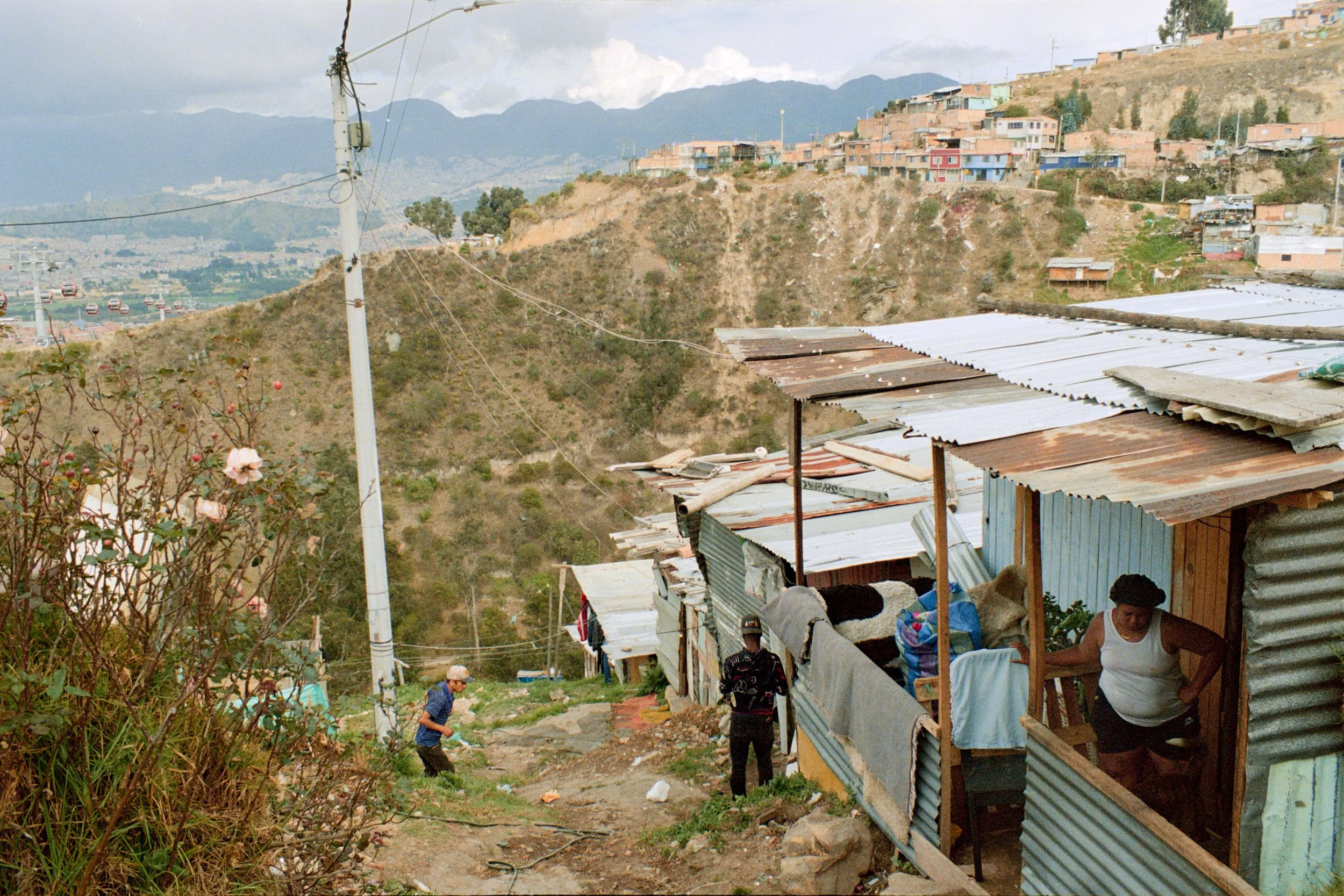
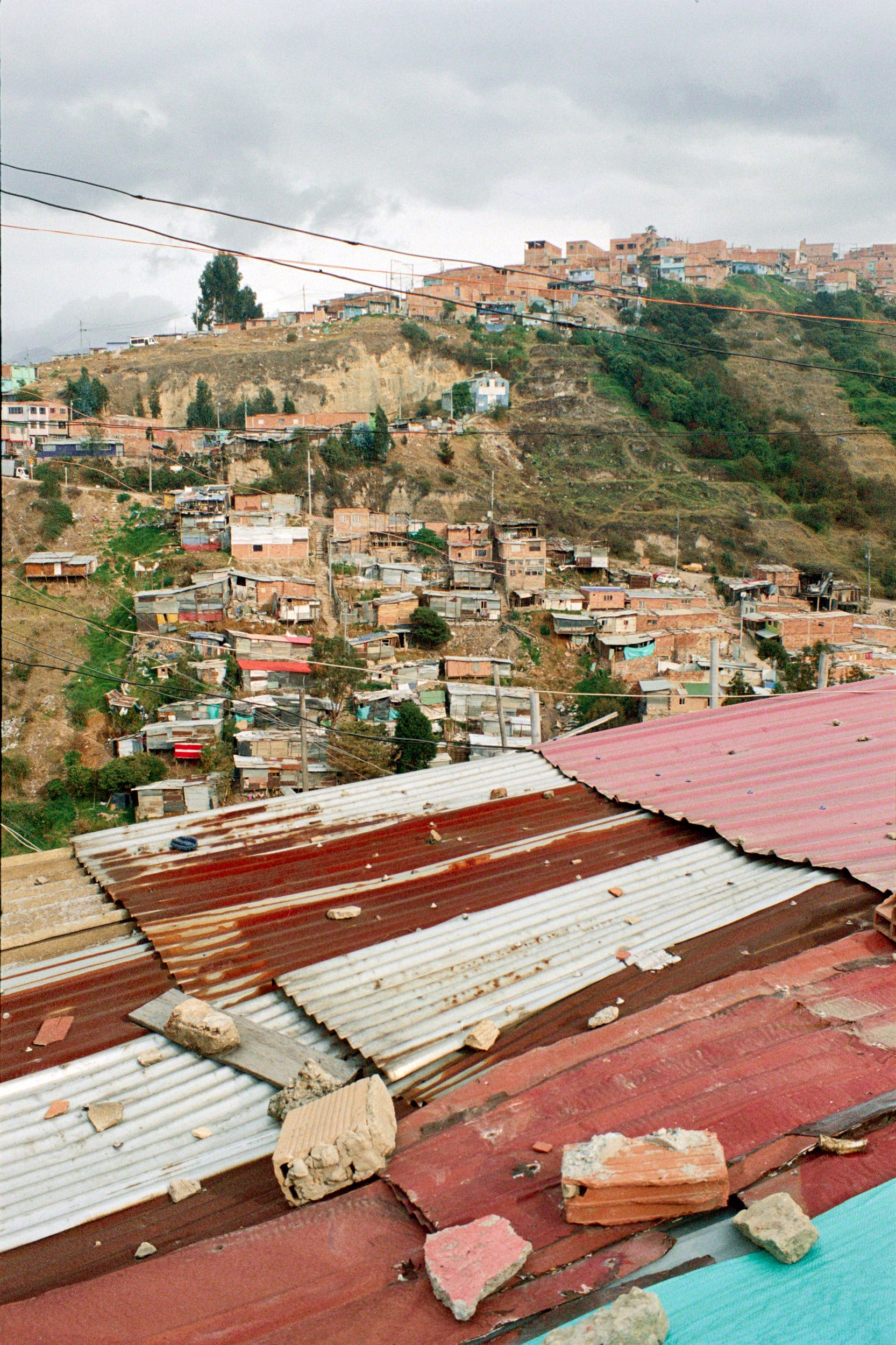
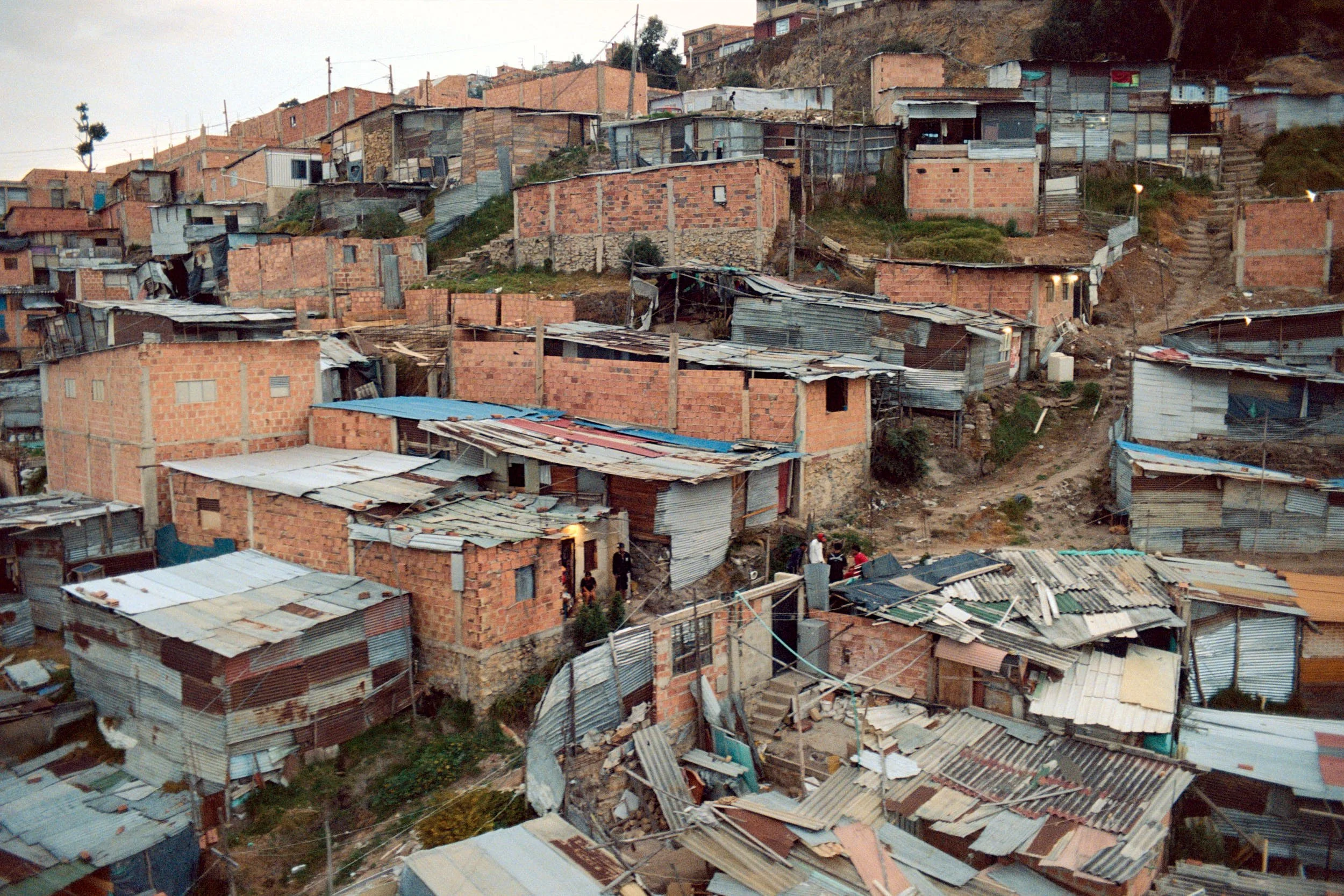
A view of one of the informal settlements built on the mountainside.
On the steep mountainsides of Ciudad Bolívar - a localidad (district) in southern Bogotá, Colombia - families informally build homes from whatever materials they can find. Plastic sheets, wooden poles, and salvaged roofing provide shelter on slopes vulnerable to the natural elements, forming settlements known locally as las invasiones (“the invasions”). Due to the informal nature of the settlements, they are built on terrain that is very vulnerable to natural disasters: steep cliffs on the sides of mountains, eroding valleys, weakening foundations, deep ravines with homes at their edges. However, people still travel to Ciudad Bolívar to settle land informally for various reasons: they were kicked out from somewhere else, they are displaced, they have family problems, they have nowhere to live, they don't have a roof, or they don’t have anything to give their children. “They try to look for that peace, let’s say, that peace of mind. Because, in itself, this gives a lot of peace of mind. Why? Because in many places you pay rent, water, electricity, gas, right? And that really leads one to exhaust oneself. You go crazy.” – Jason. For the families who live there, these settlements offer a home they struggle to find elsewhere.
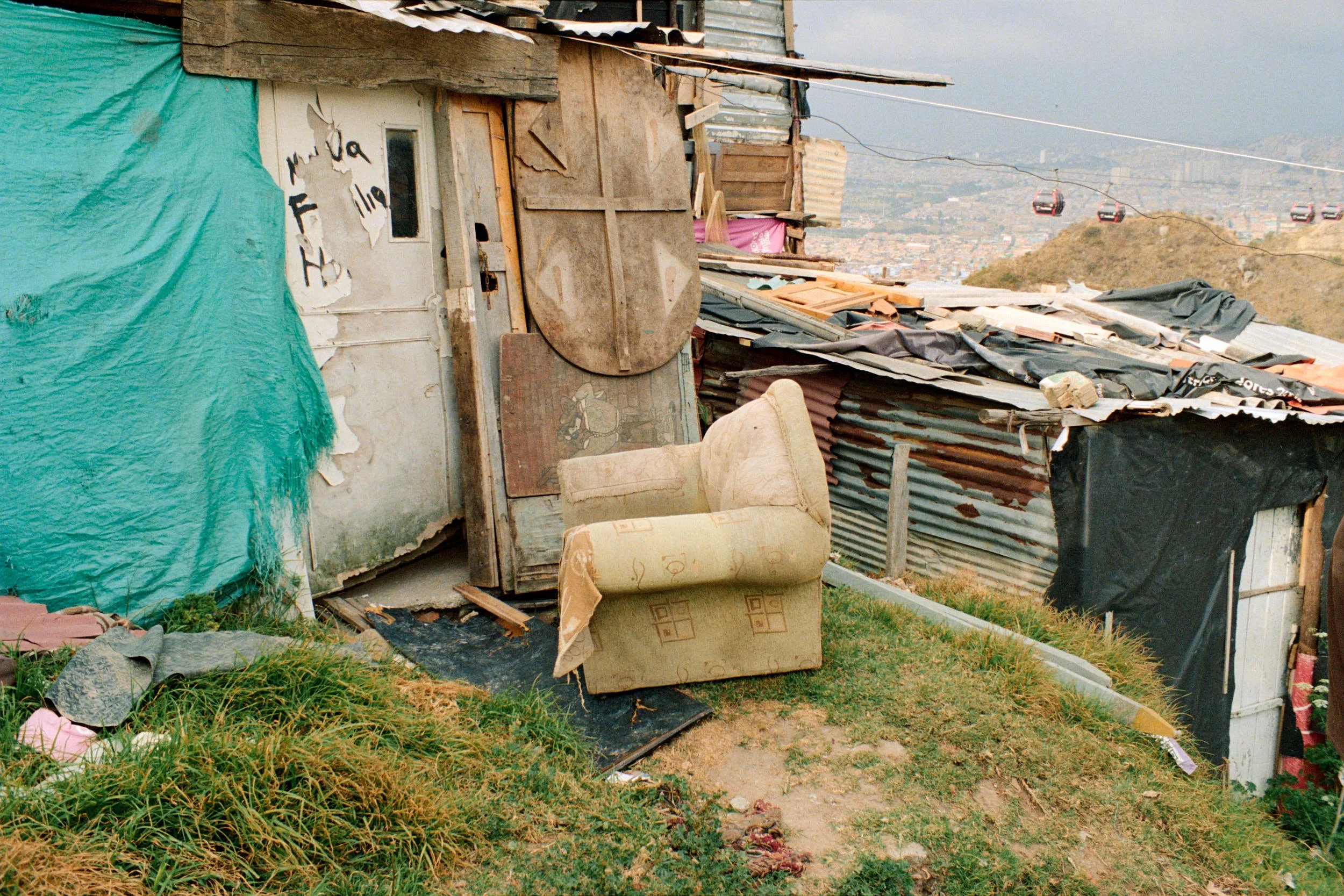
Two neighbors houses, almost touching, showing the variety of material used.
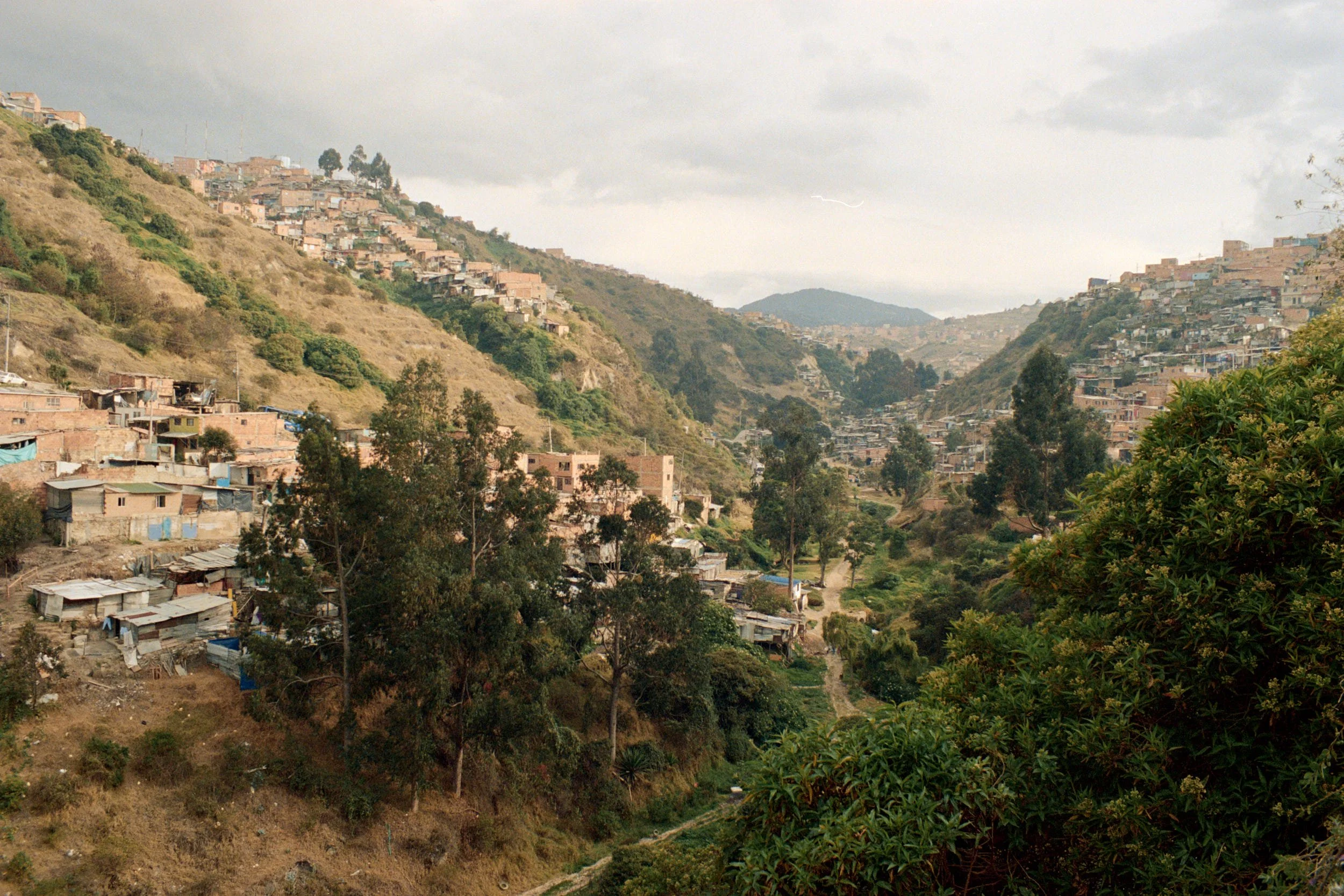
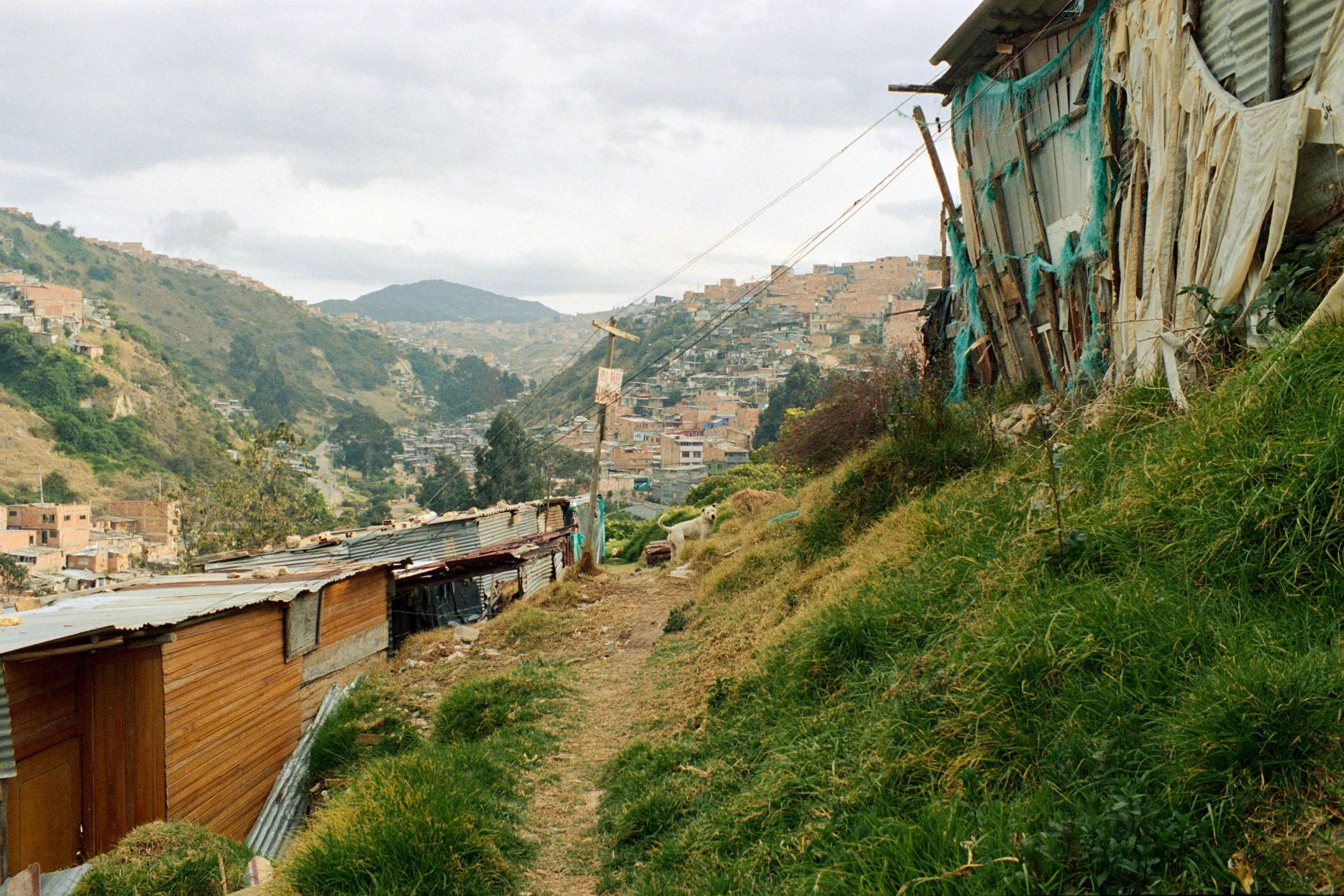
A glimpse through the steep valley that houses more informal settlements.
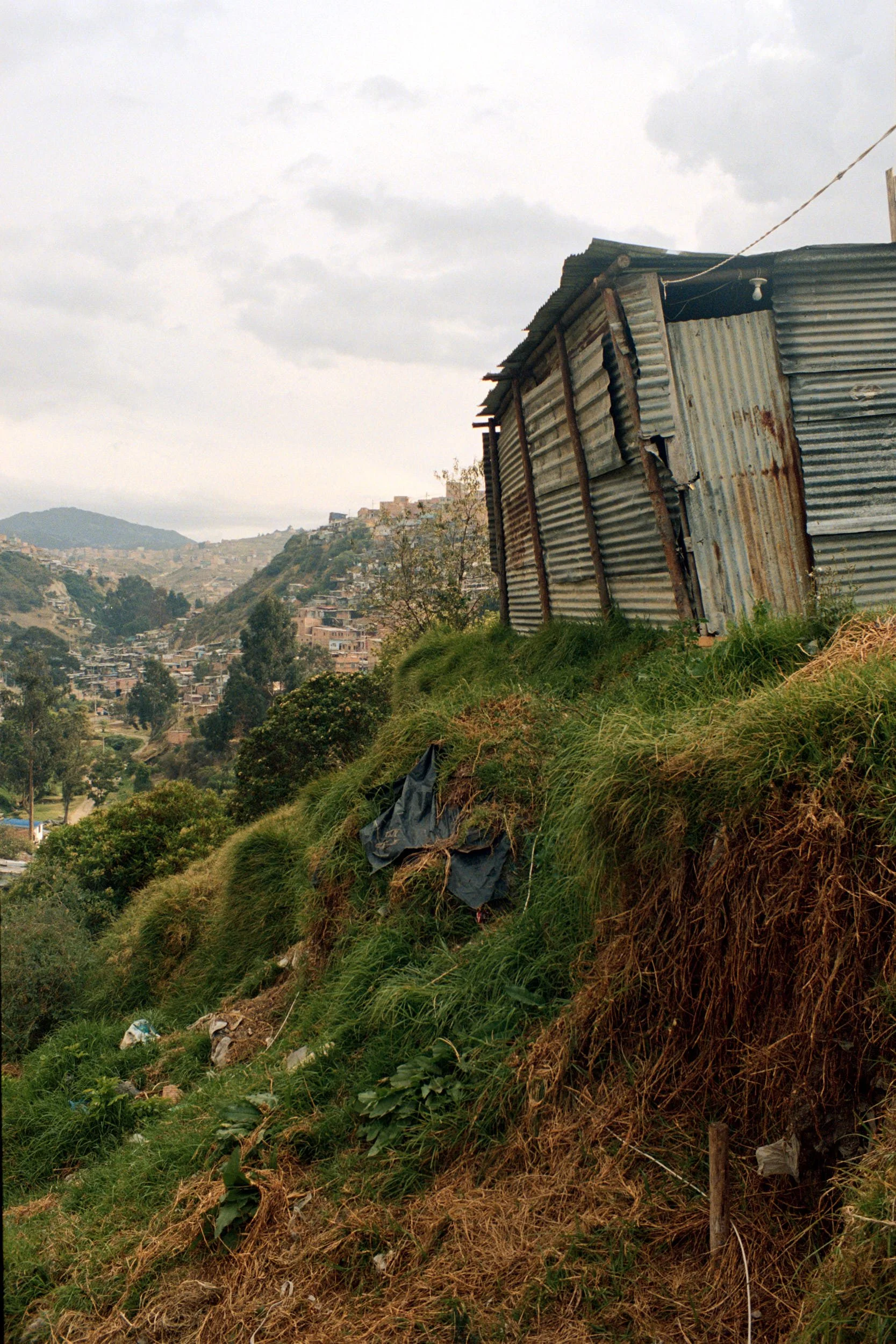
A house at the very top of a steep ravine.
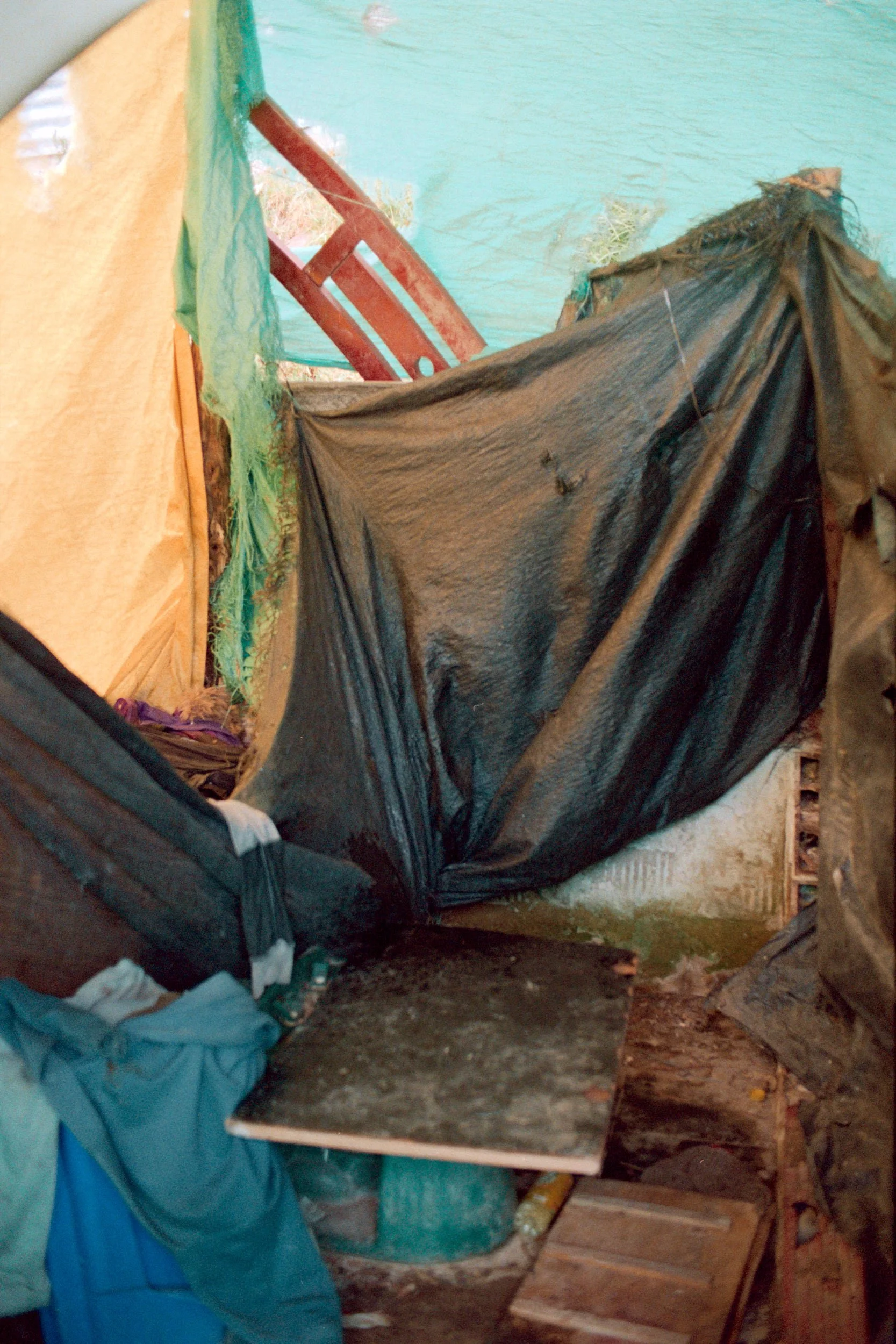
A makeshift bathroom in a resident’s home.
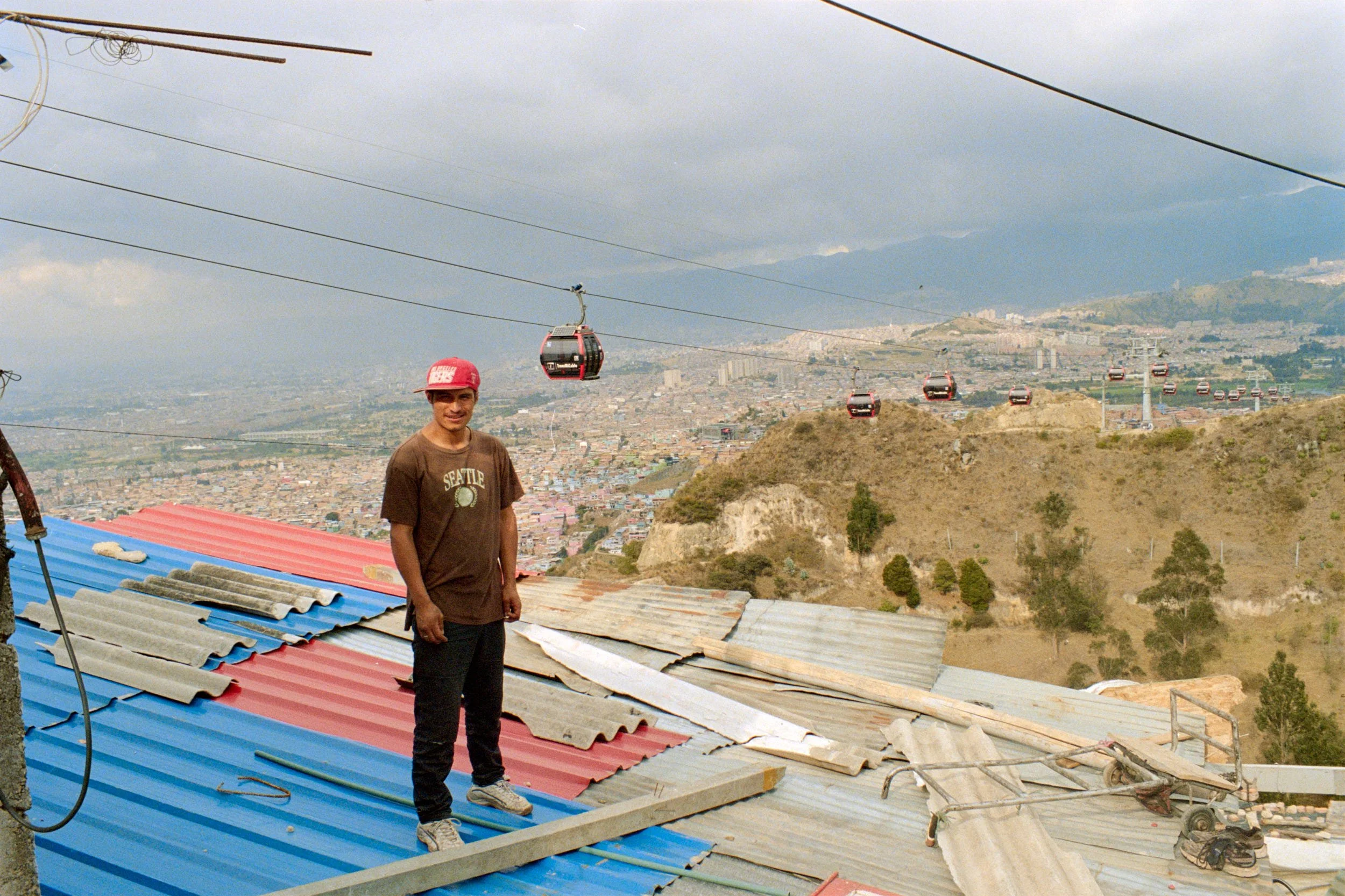
Jason stands on the roof that he built himself.
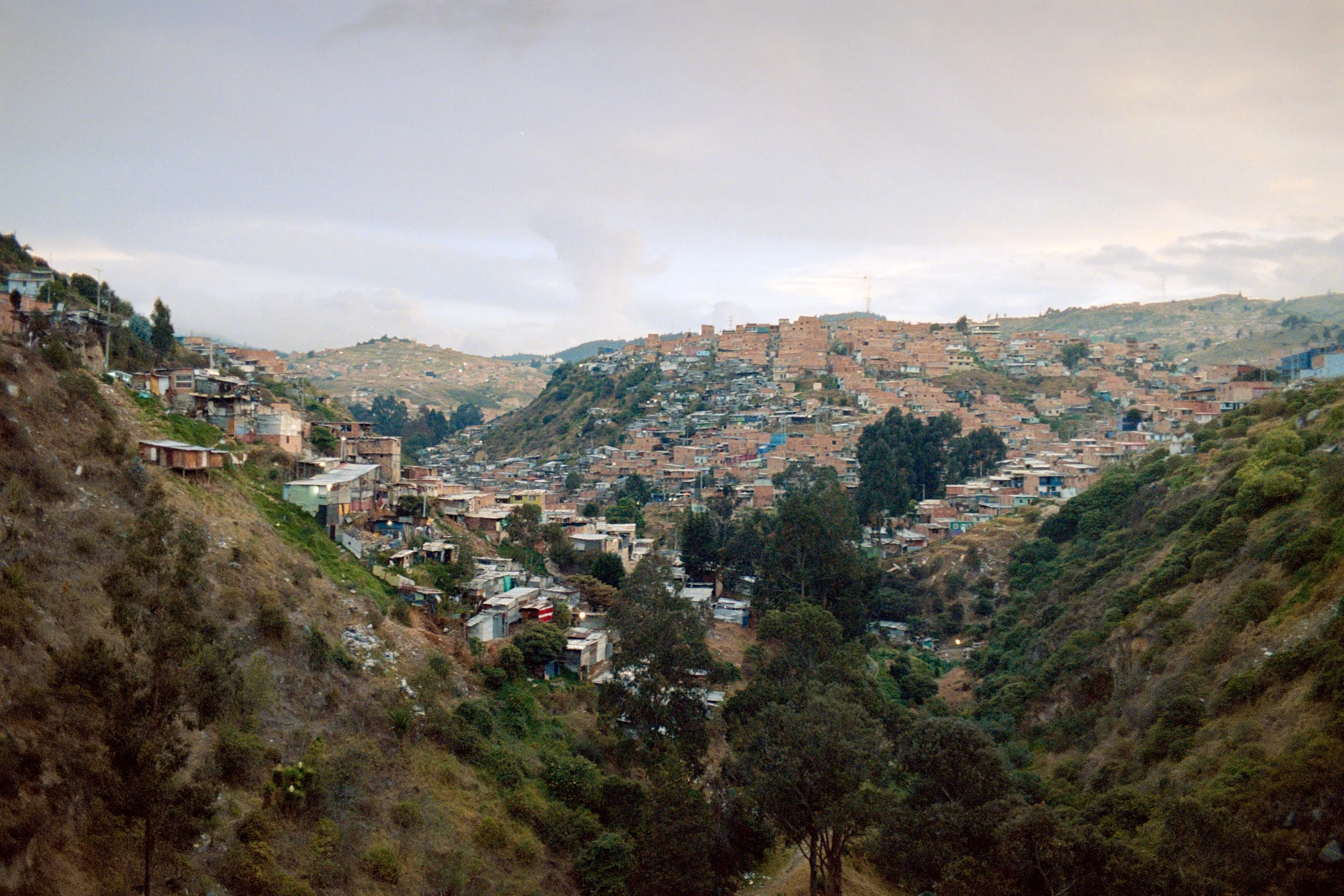
A second view through the steep valley that houses informal settlements.
Yuliana is a young mother of five whose family lives in an informal settlement on the side of a steep mountain. “My children are my life. I fight and work for them.” She dedicates her life to her family and is focused on finding ways to provide for them, such as walking the streets with lollipops, candies, or trash bags to sell. “We don’t ask for a handout. Instead, we always carry something to sell and give in exchange for help so if at that moment the person doesn’t feel like buying a bag or candy, maybe they can help us with a pound of rice, a little oil, a potato.” – Yuliana. Her husband, Jason, and their sons, survive off of recycling, rummaging through garbage, and separating what they’ve found by material, color, etc. “We’re also street vendors. I like to ‘retacar’, that is, asking people up north for a potato or some bread. Just as many people say, ‘I have my car to haul stuff,’ we have pushcarts.” – Jason, husband of Yuliana.
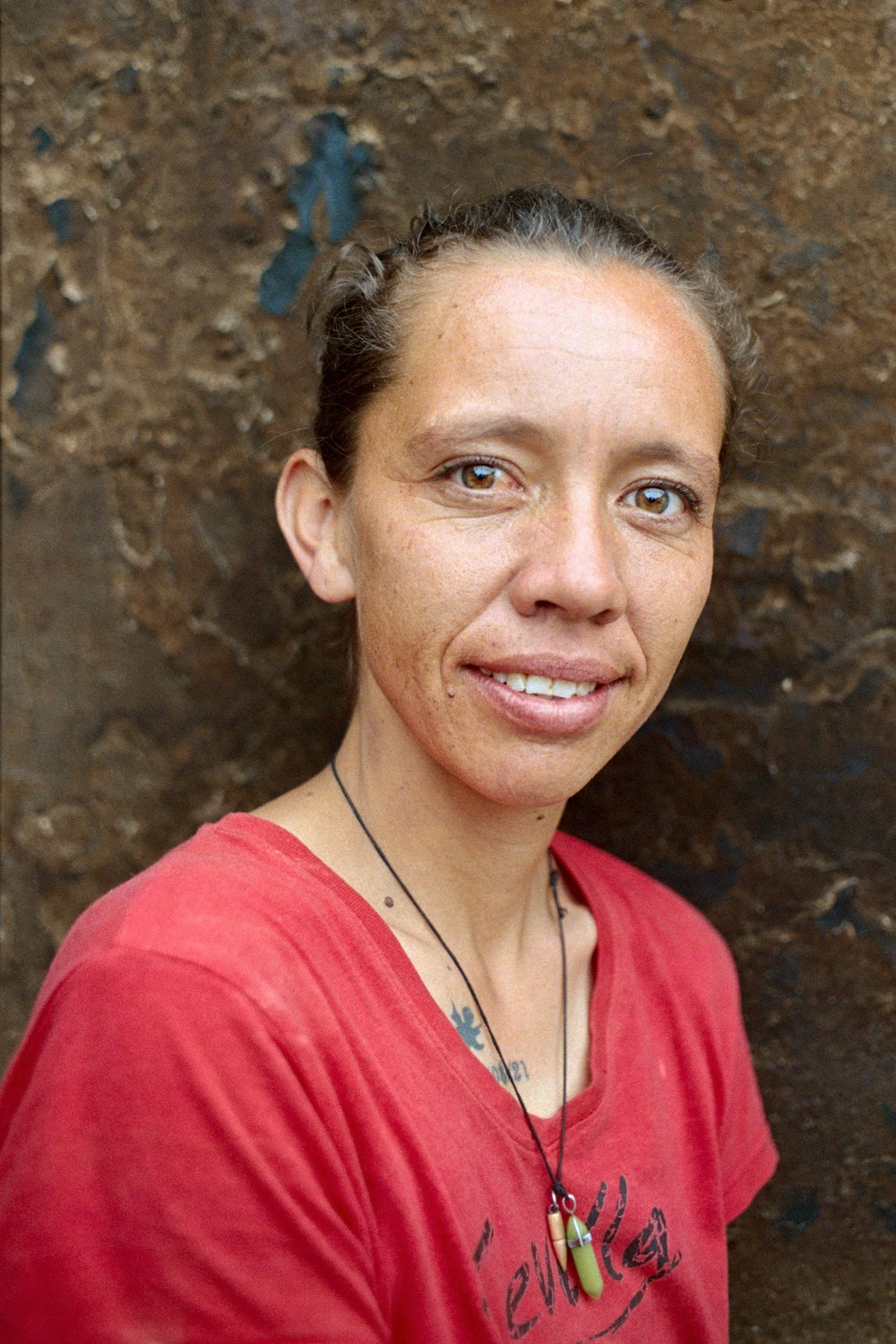
Yuliana.
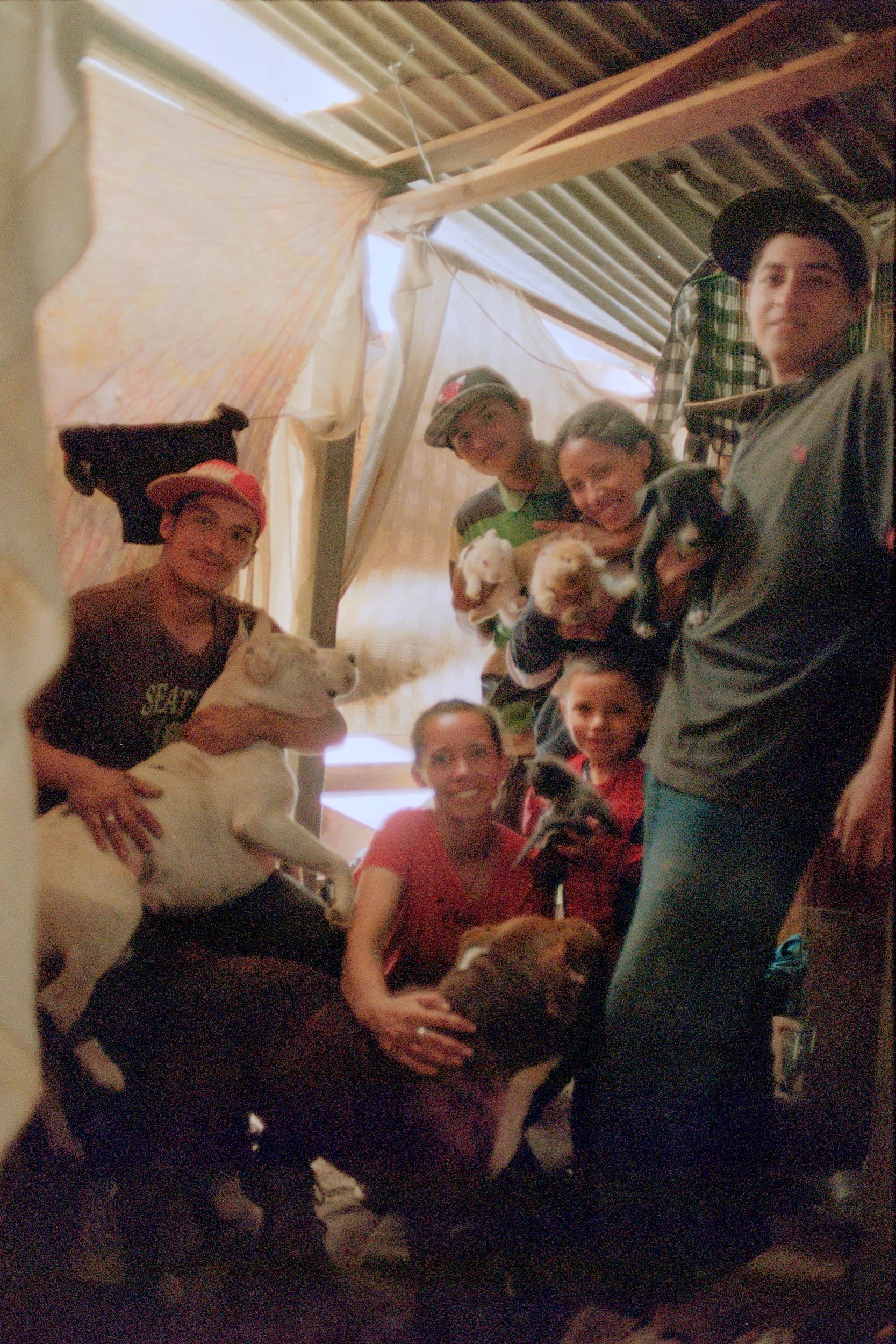
Jason, Yuliana, their children, and their pets.
Even with her efforts to provide for her children, Yuliana fears that the authorities may take them away. “Just this morning, a neighbor’s children had already been taken away by authorities. She’s a person who, like me, also went out hustling with her candies and trash bags.” – Yuliana. She states that taking her children away is no solution, and that it only makes the problems worse for both the children and their families. “If you’re a street vendor who works for your children, well, when the government takes them away, your life is destroyed. If my children are taken from me, I no longer have a life.” Residents said they wanted alternatives that would allow parents to work while their children were cared for, including access to daycare, school, and safe places for children to spend the day. “The authorities always say that the child is in such and such condition, but they never ask about the conditions in which we work and live, why we’re not able to provide certain things. And when they take away our children, where does that leave a mother? Where does that leave our little children?” – Yuliana.
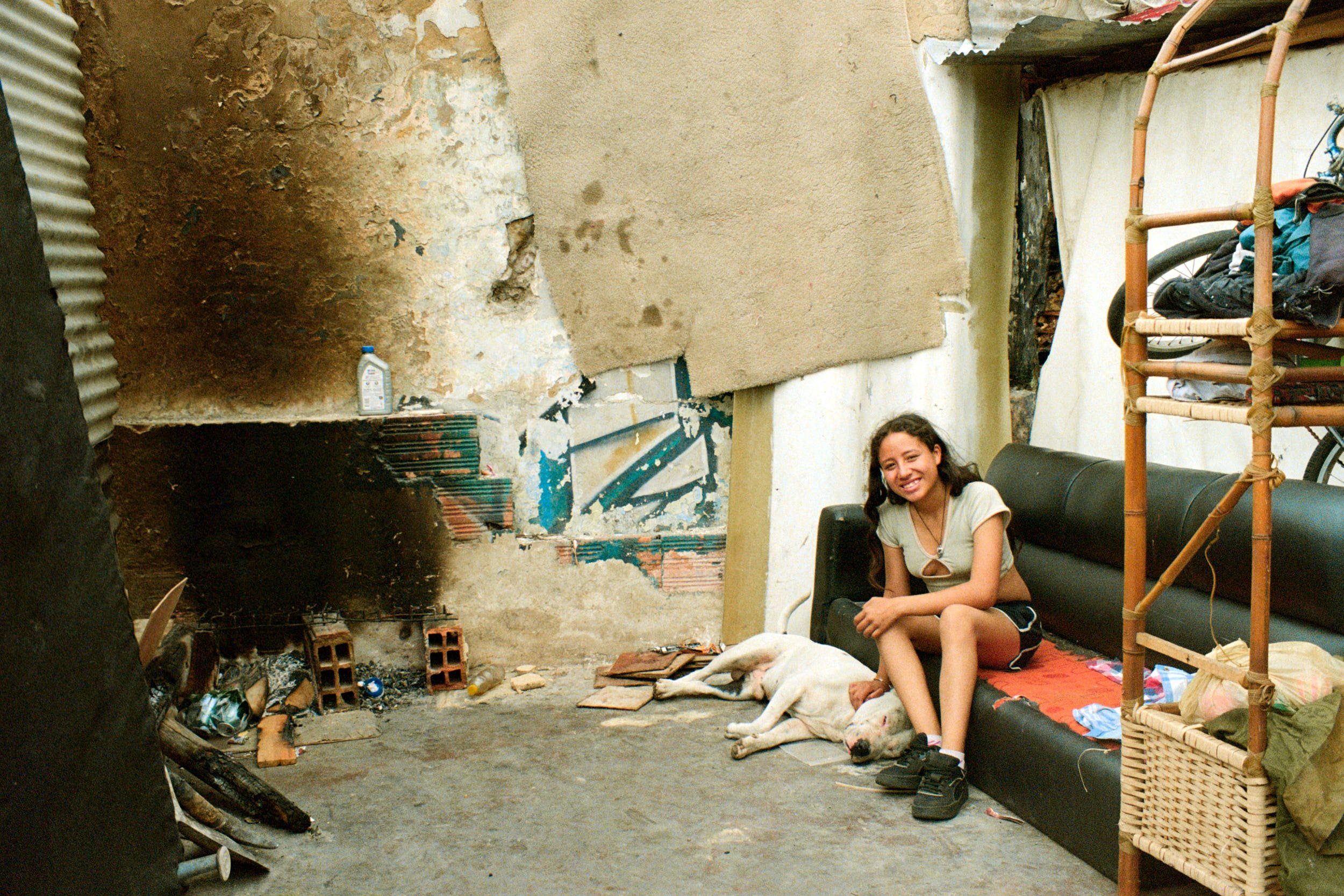
Daughter of Yuliana and Jason.
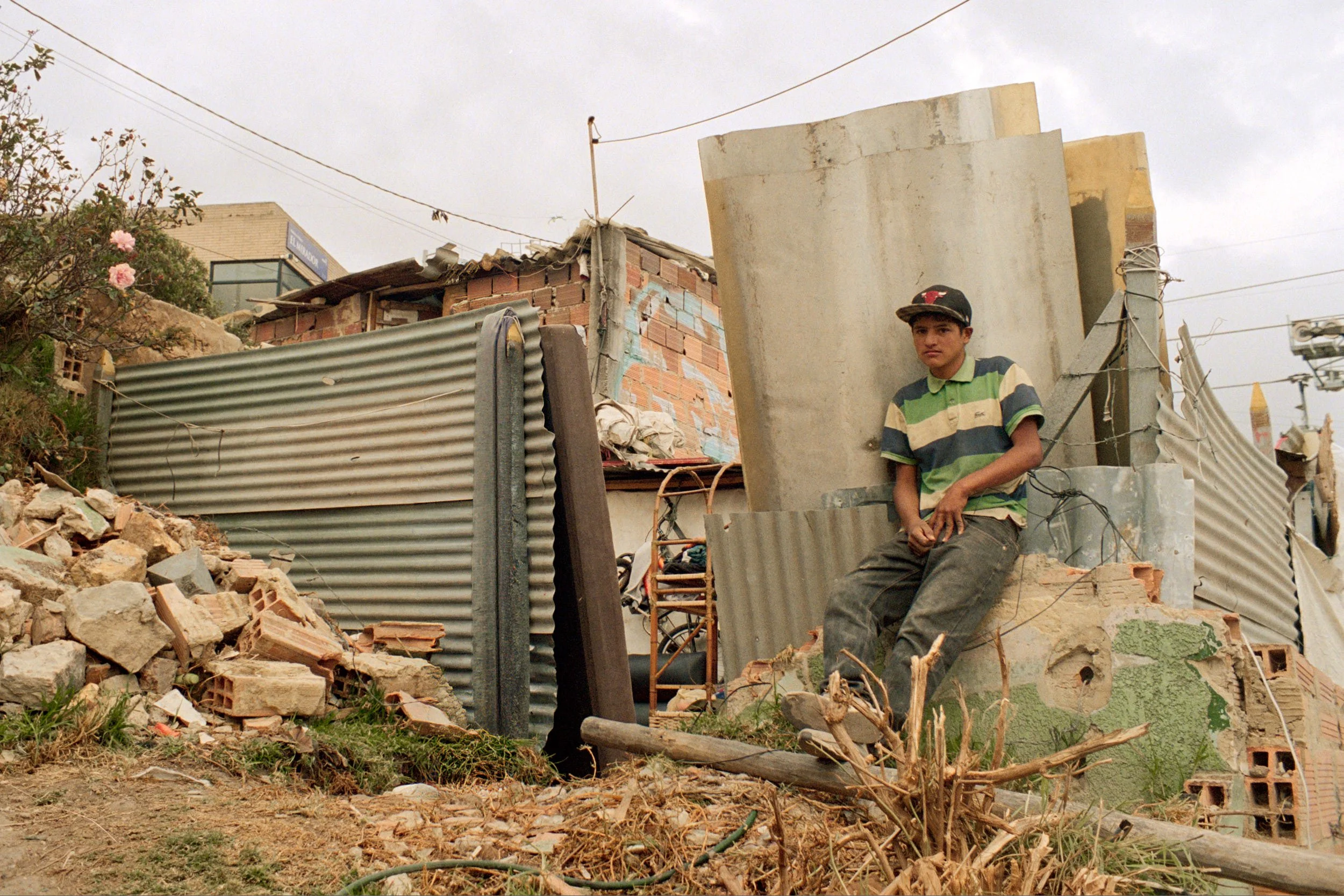
Boy stands at the entrance of the house in which he lives.
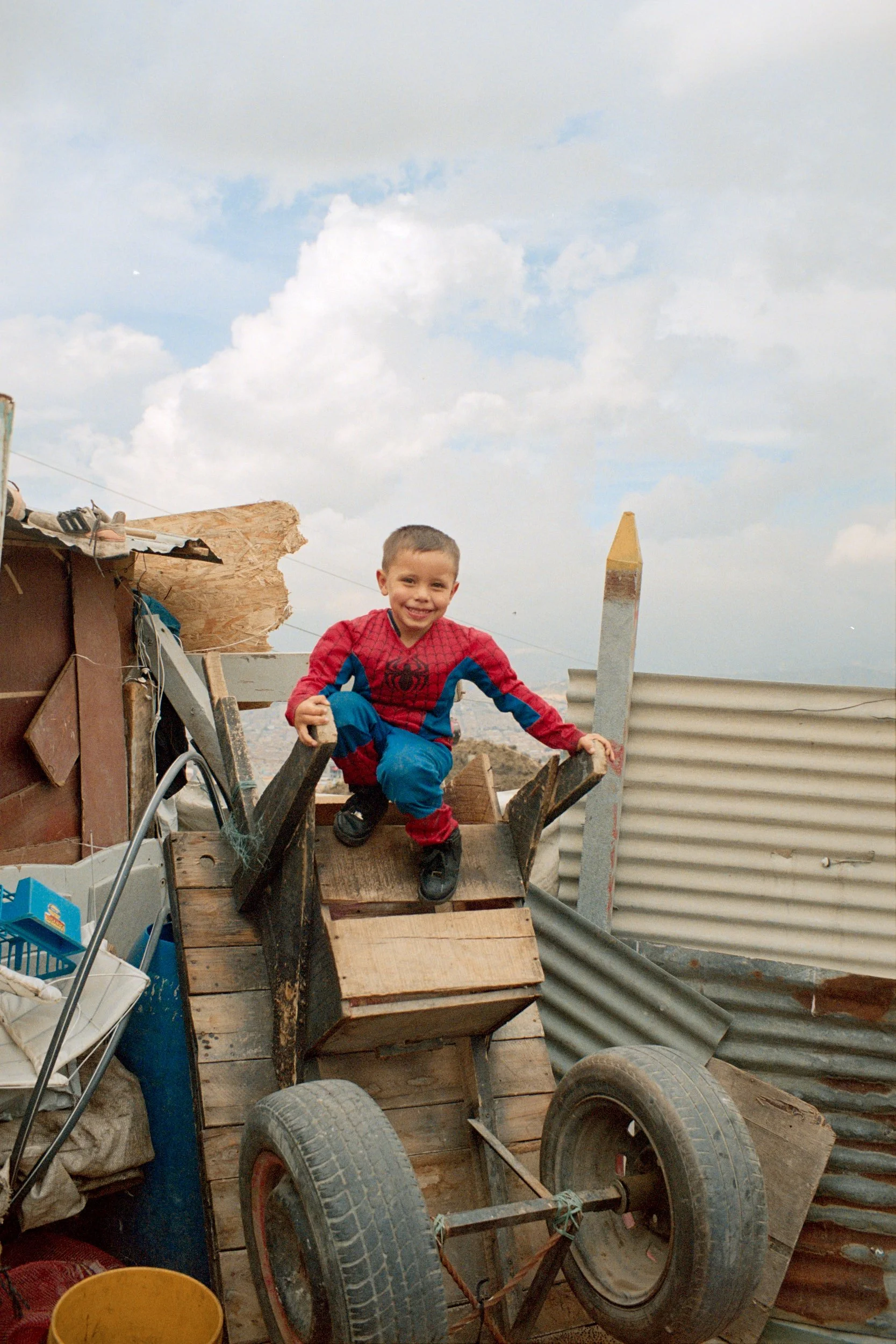
Young boy plays on top of a "zorra", a pushcart meant for carrying trash.
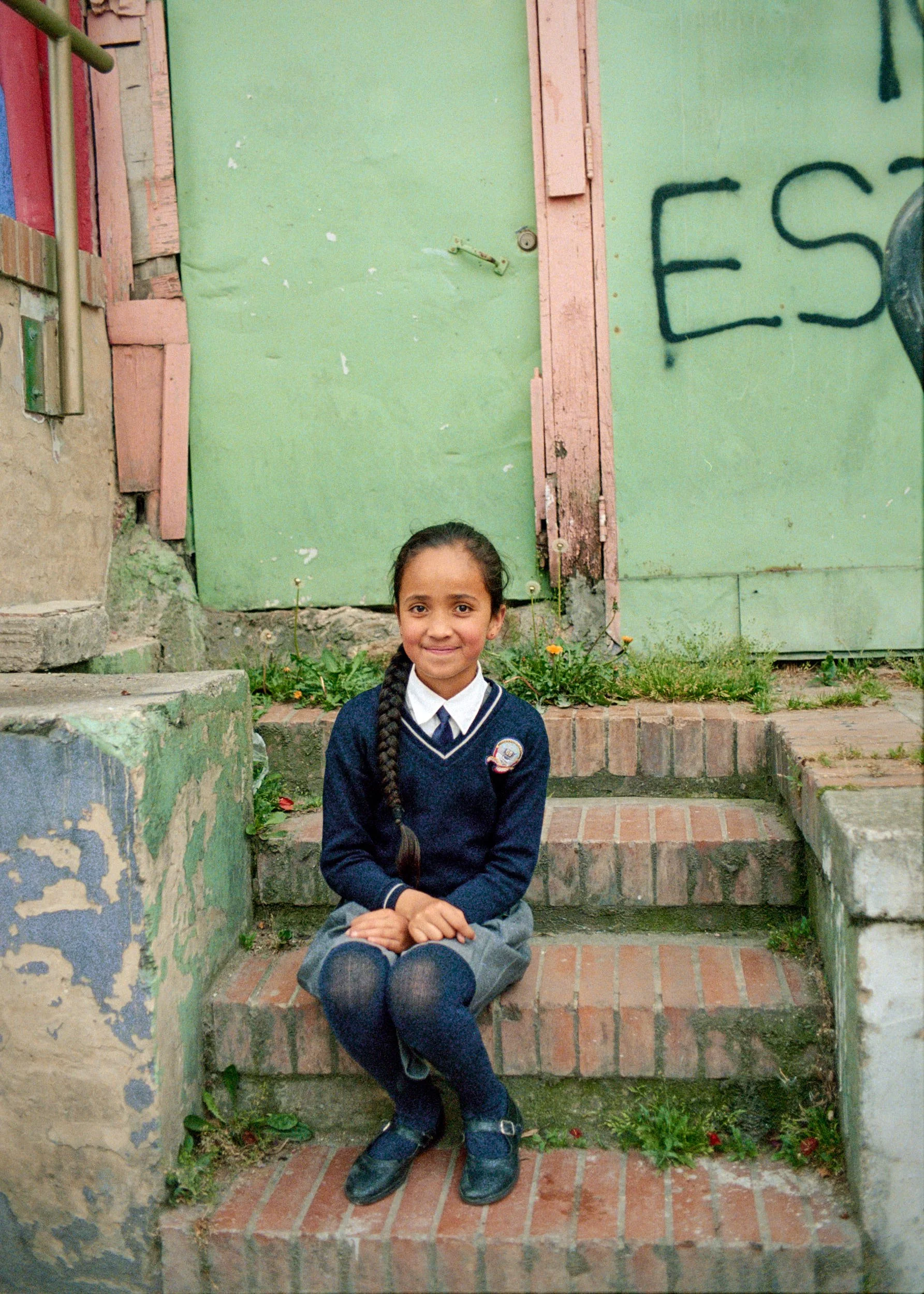
Young girl resting on her way home from school.
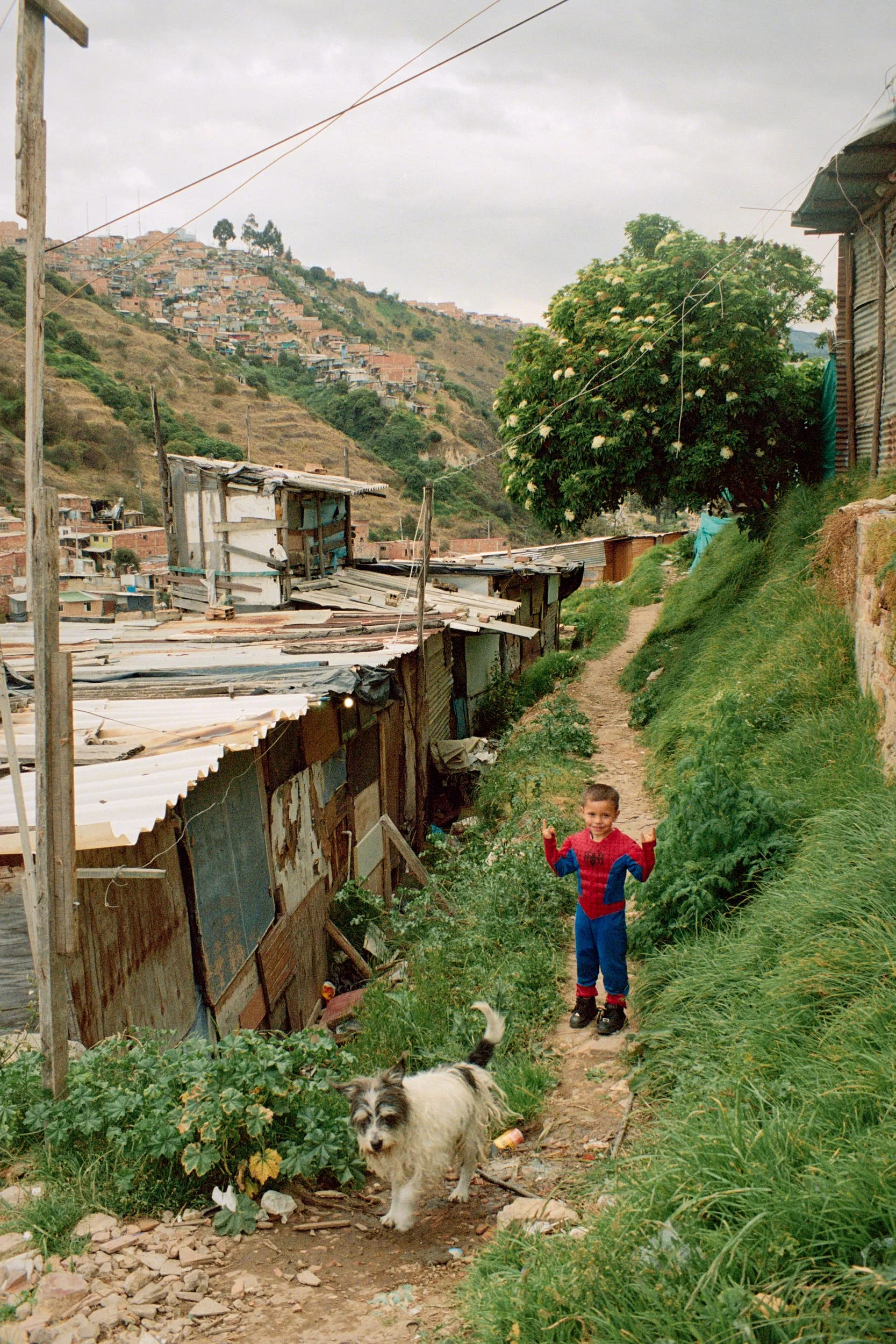
Alternative portrait of the son of Yuliana and Jason.
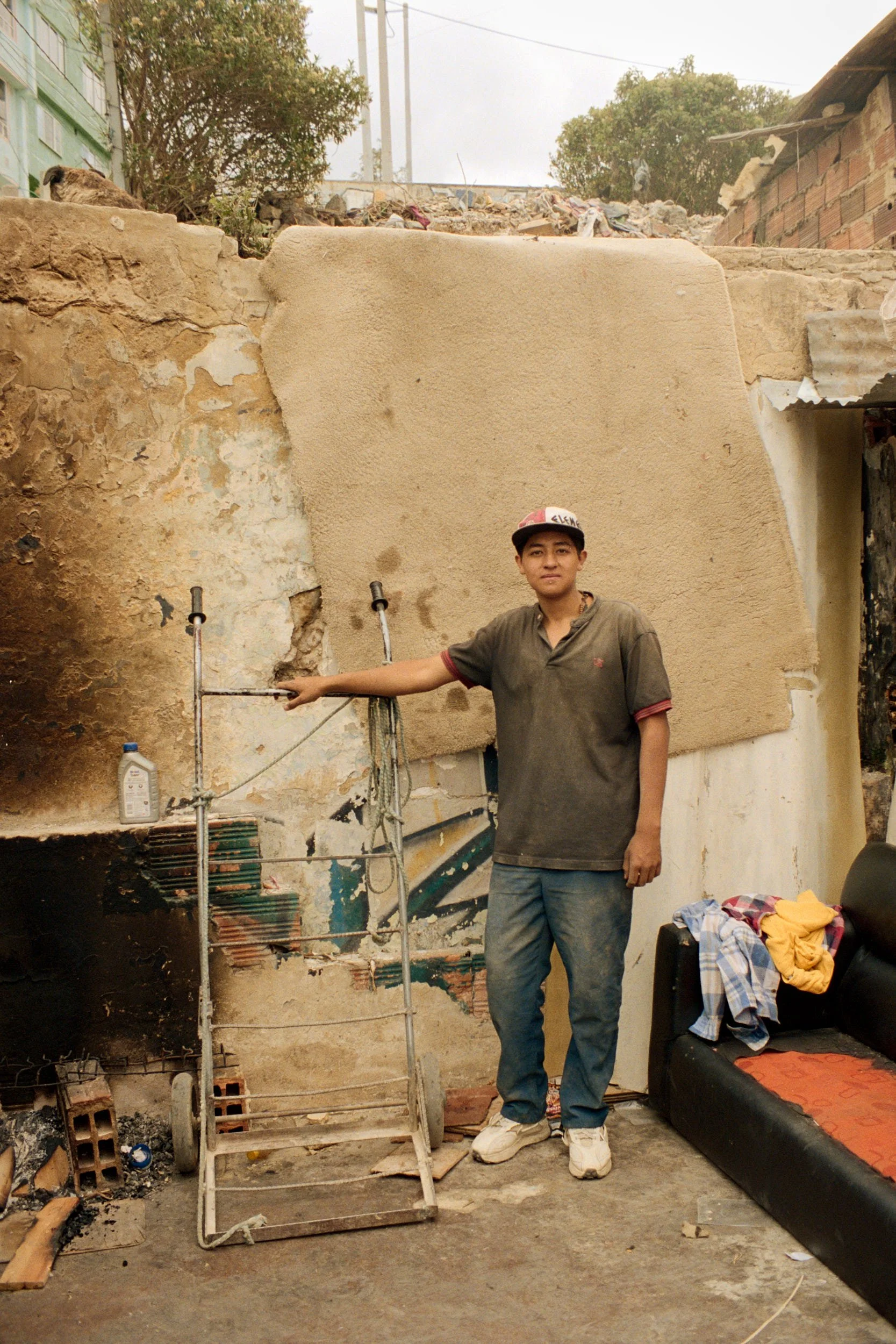
Boy standing in the patio in his house.
Despite the scarcity of resources, what the settlements lack in material resources, they make up for in a culture of support. These communities welcome anyone in need; there is no ranking system, and there is no strict authority figure who chooses who is and isn’t allowed to enter. As a community, they get together and choose who can build there according to one criterion: necessity. “It's not about who is allowed, but rather it's for the person who needs it. In other words, it's not like I come and sell to you, no. If a person arrives, to give you an example, me and my wife, I have nowhere to live, I'm living on the street, then they are given help. In the sense that if you're not... if you're on the street, then set up. You aren't asked for money or anything like that, but rather the need to want to live and be okay.” – Jason. Here in the settlement, food is shared, materials are shared, and neighbors help each other build houses, roofs, and do repairs. “The point is for everyone to help each other out as a community.” – Yuliana. “Our power here is being united. That is, supporting each other.” – Jason. “If here they see... or we see that there is a person in need, go ahead, set up. Make a home there. We all try to always combine our strength. Everyone.” – Yuliana. Wendy, a mother who migrated from Venezuela, was welcomed into the settlement by its residents. She heard about Bogotá from a cousin and, because word travels, she came to Ciudad Bolívar to find a place to settle. She states that despite the hardships in the settlements, she is grateful to Colombia because there are more opportunities for her children to study, to be able to eat, and to have a job. “I’m also grateful for health, and my neighbor here because she is an excellent person.” She cares for her family by selling homecooked meals along with fresh squeezed juices out of her house. “You have to bust your tail, but it can be done.”
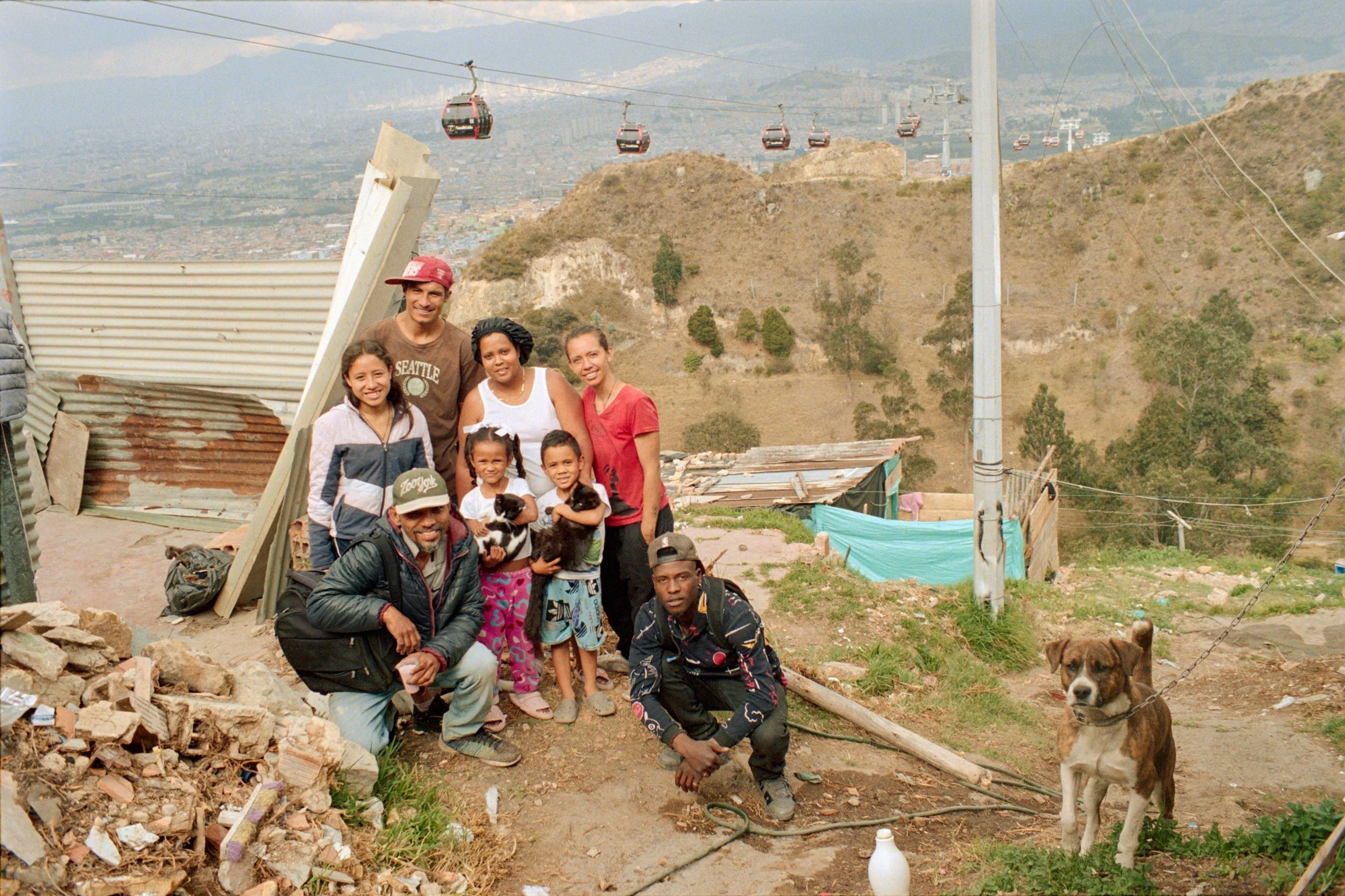
Group portrait of neighbors from four adjacent houses.
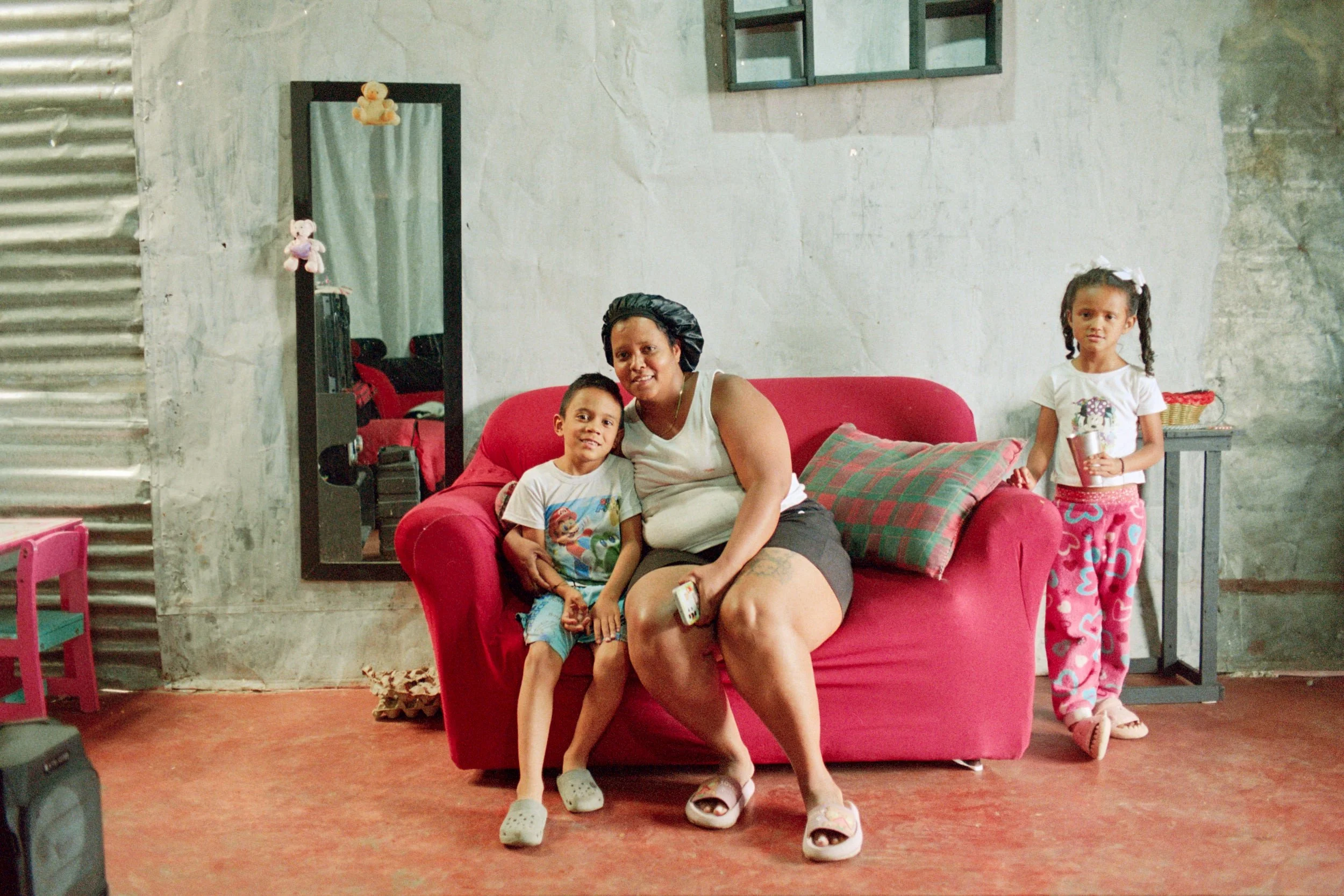
Wendy and her son and daughter.
A scene looking down along one of the paths that seven households share.
Yet solidarity has its limits. Although residents avoid conventional rent and utility payments, living in the settlement carries other costs: residents of the settlements are forced to deal with daily fears of getting robbed. In addition, due to limited space, there are fights over land and disputes over areas in which to live and work. “It's like, as they say over in Medellín, like the comunas, where if you cross over from here to there, you know this group or faction will attack you... it's the same here. But here, the ones running things are the ollas (drug dens/gangcontrolled spots). They are the ones trying to seize power. They're the ones selling drugs in larger quantities to people. The gangs, let’s say.” – Jason.
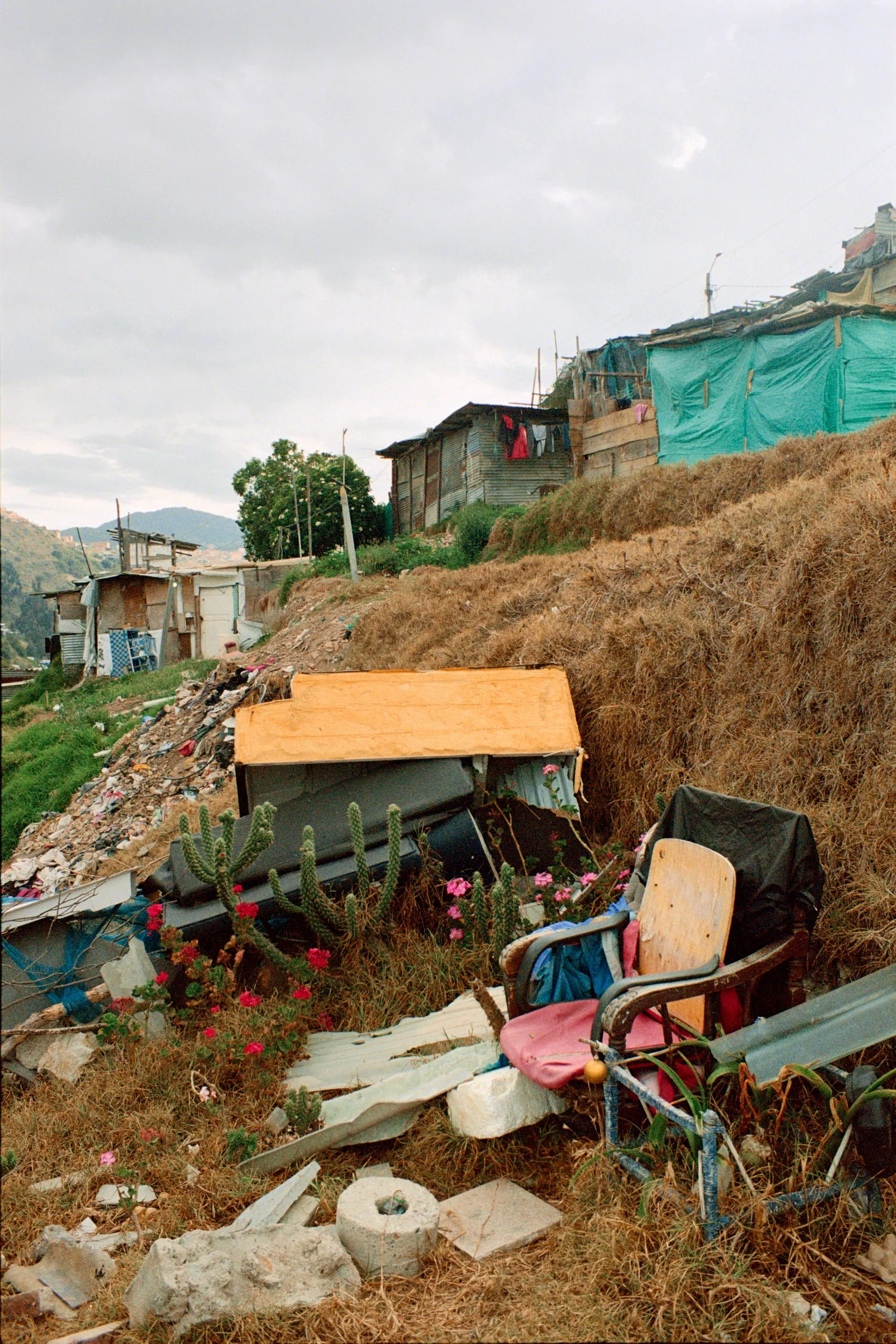
The chair in which users sit to consume drugs.
A location often disputed by local gangs.
The path leading to the "olla" (drug den led by gangs).
But perhaps the greatest risk of all is the risk of natural disasters. The areas in which people settle informally expose residents to a high likelihood of being affected by landslides, mudslides, erosion, earthquakes, and even regular rainfall and humidity. Because of its positioning on the mountainside, an earthquake that can barely be felt in most of Bogotá is enough to cause houses to collapse and the people inside to go down with them. Jason states that he has seen multiple houses crash down the mountain, as well as the erosion that is steadily creeping in on the houses built along the edge of cliffs and steep inclines. “Because of a lot of humidity on the mountain, at any moment it drags everything down, you know? And at the time of an earthquake, it's worse, because in an earthquake everything collapses.” Many homes are built without formal authorization or structural inspection, leaving residents exposed to risks associated with makeshift construction. “Because as you can see, our little houses are not made with concrete or brick foundations. There are houses made of plastic, wooden poles…maybe a neighbor's little corrugated roof sheets, her wooden poles, but in most cases it’s plastic. And if rain falls, and you don't have a good roof sheet, water falls right inside. So everything... many consequences from everything, right?” – Jason.
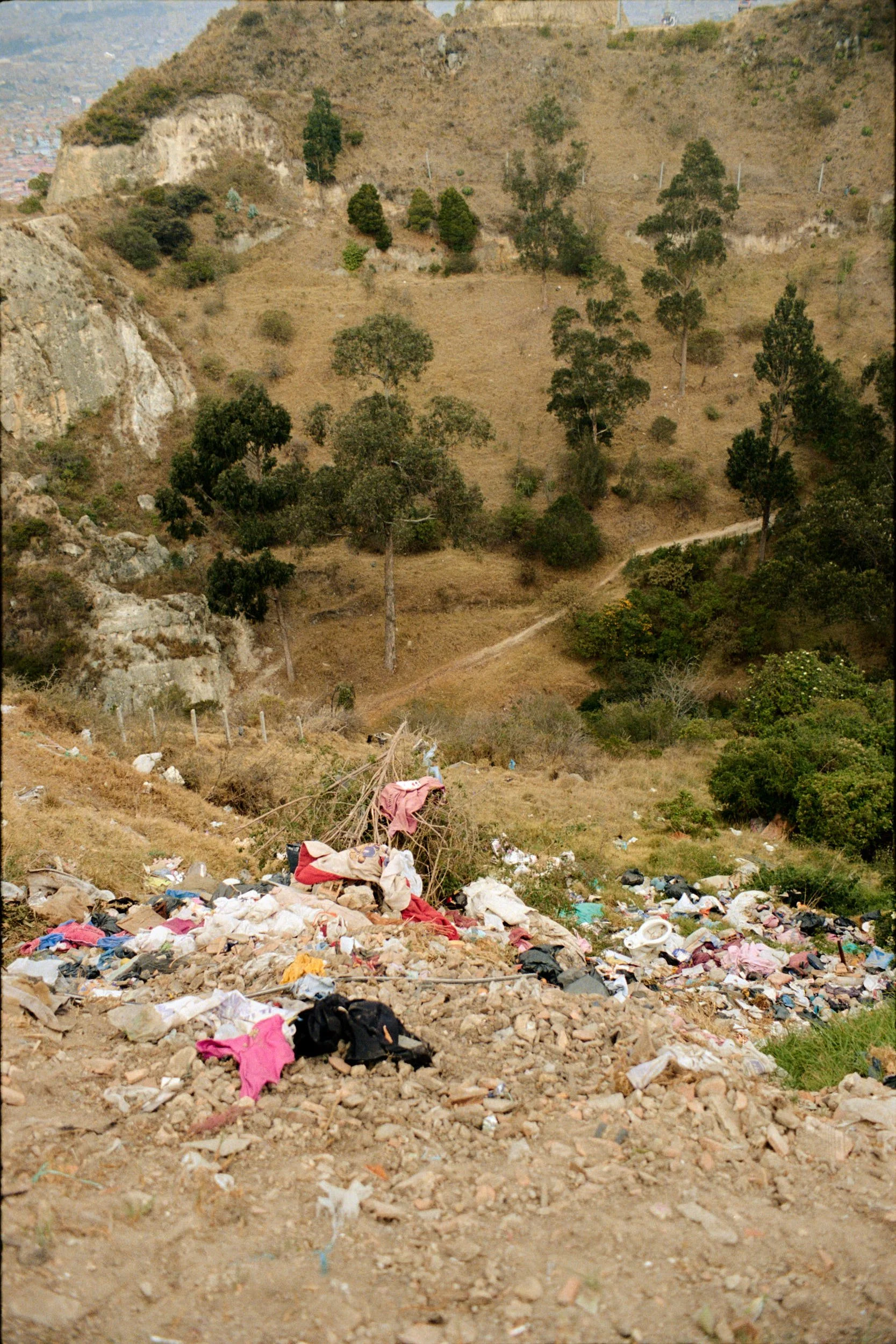
Trash falling down a steep ravine set only feet below the settlement.
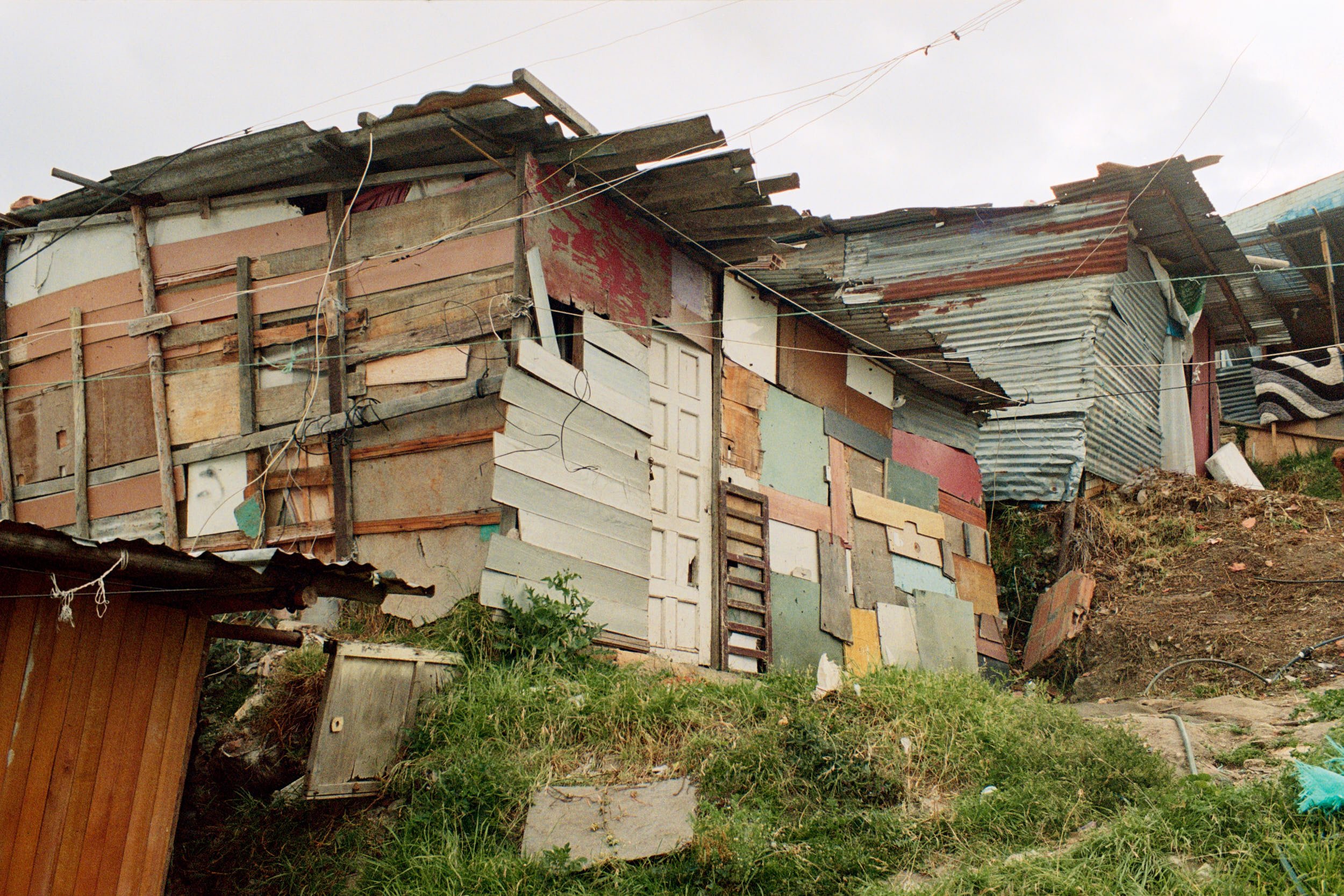
A house showing the resourcefulness in finding materials.
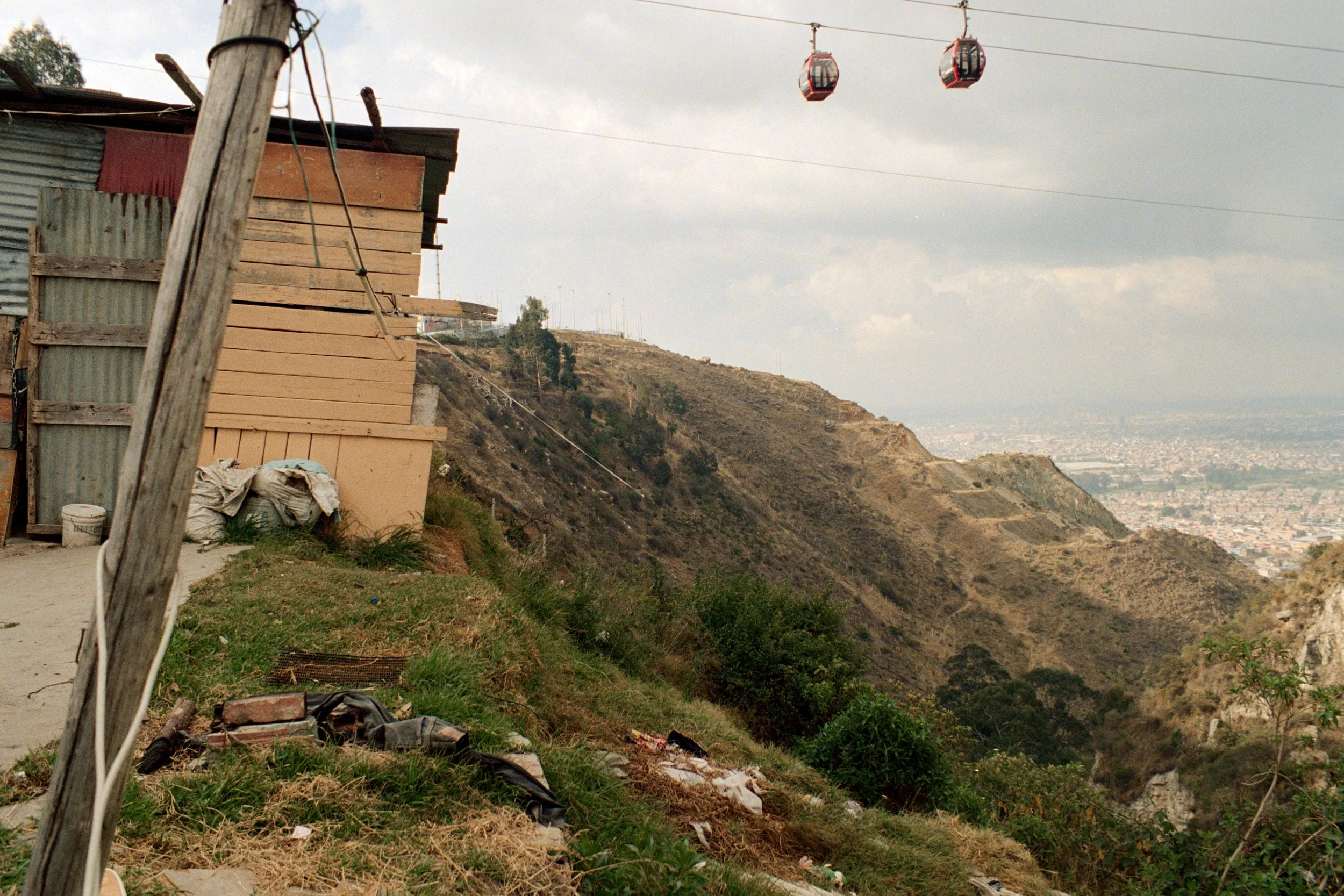
A house built at the edge of a cliff. Land erosion has made this house closer to edge over the past few years.
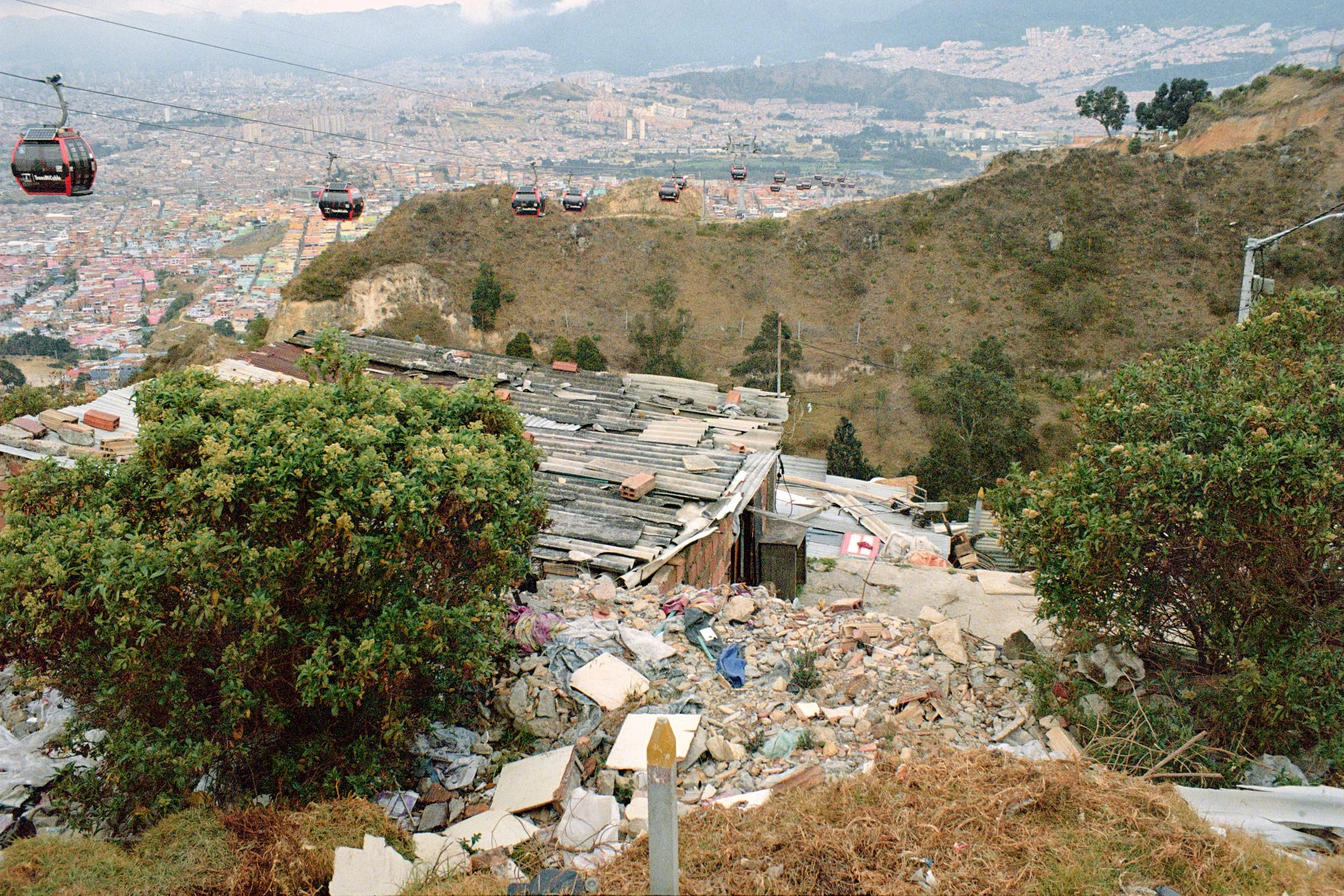
Debris where a house had collapsed from natural disaster.
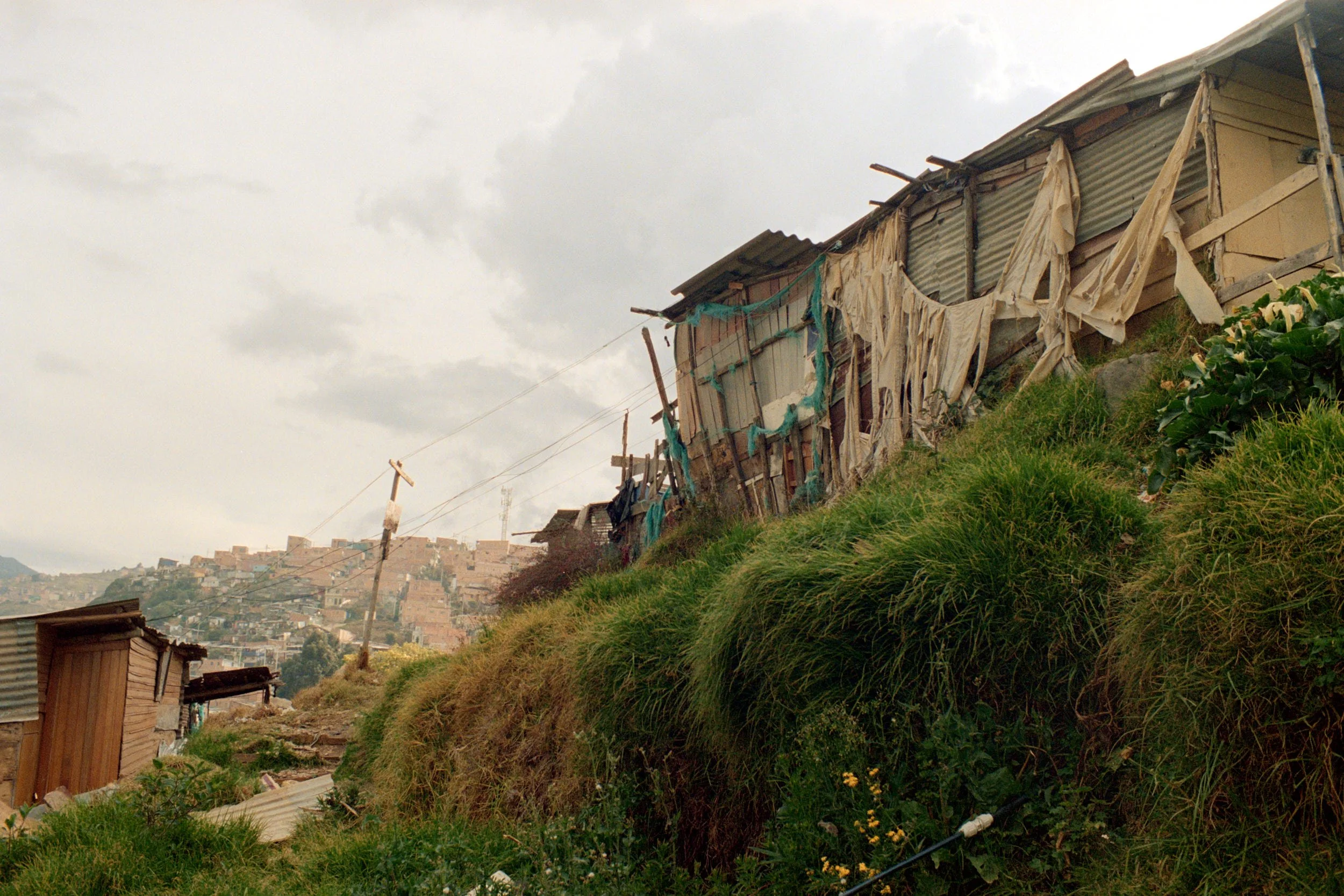
Flimsy houses built at the edge of a cliff.
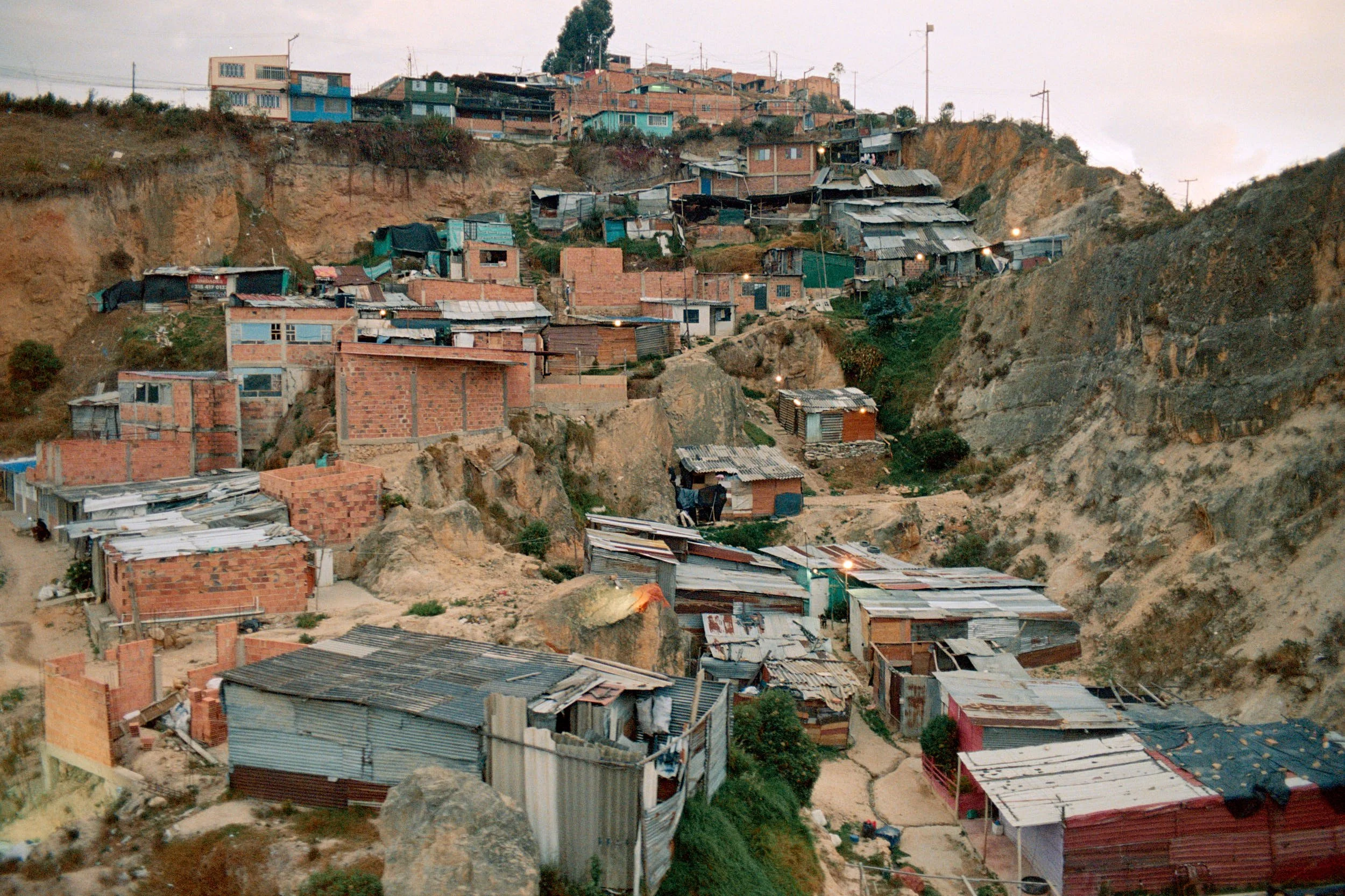
A cliffside settlement of Ciudad Bolívar.
Residents have built a community in which people share what little they have, helping one another find shelter and survive. But solidarity cannot stabilize an eroding slope, prevent the next landslide, or guarantee that a family will be able to remain together.
Yuliana and Jason sit inside their bedroom, surrounded by walls of plastic, cloth, and sheet metal.